May 27, 2026
🔎 14x citation gap · 🤖 Claude replaces SDR · 📊 Cold email gets real math
AI search rewrites discovery, Claude replaces weak SDR motion, and cold email gets real math
AI search is quietly writing the shortlist before your attribution report wakes up. This week has a 14x citation gap, a Claude-powered outbound rebuild that went from one call a week to seven, and cold-email math that makes spray-and-pray look even dumber than usual. Bring receipts or bring a broom.
AI Search Is the New Shortlist
The buyer interface is moving from blue links to cited answers. That makes third-party authority, expert posts, and answer-ready pages a GTM problem, not just an SEO chore.
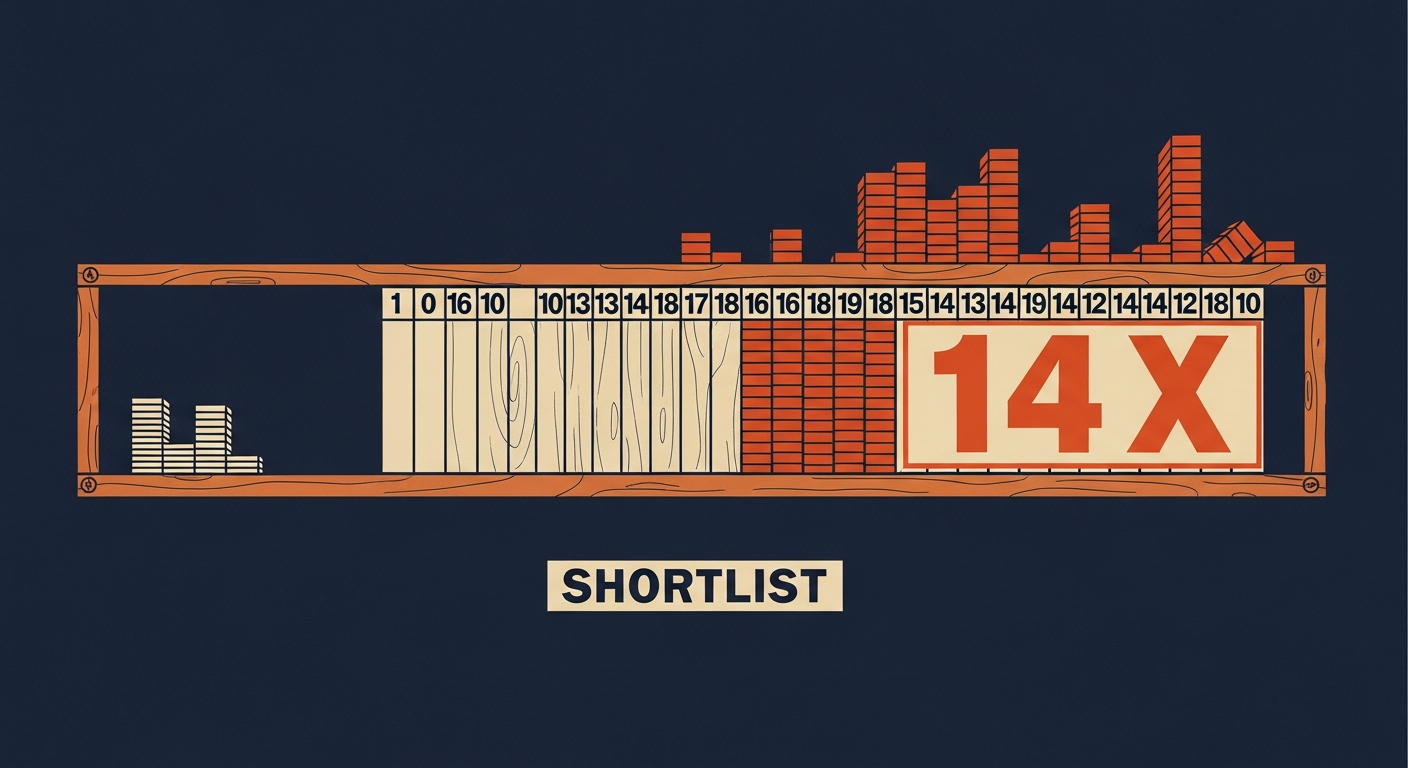
The Hidden Selection Phase: The 14x Gap Between Branded and Unbranded AI Citations
Foundation and AirOps analyzed 5.1 million AI responses and 57.2 million citations across 50 B2B brands. The sharp edge: in unbranded category searches, brand-owned pages earned only 2.2% of citations, while external sources carried the discovery work. Your site still matters, but the shortlist is increasingly built from proof you do not control.
Source: Foundation Labs / AirOps
The New Rules of AI Visibility and How To Prepare for It
Aleyda Solis turns AI visibility into an operating checklist: write content that answers complete questions, clarify entities, support claims with credible sources, and stop treating rankings as the only scoreboard. The practical shift is from keyword ownership to being easy for answer engines to quote accurately.
Source: Moz
GTMnow and Webflow CEO Linda Tong frame AEO as a discovery and attribution problem. Buyers are forming opinions inside AI-generated answers before a normal visit hits analytics. The companies that win will make their sites, docs, customer proof, and executive expertise legible to answer engines.
Source: GTMnow
New Meltwater Research Shares 5 Insights From 9 Million AI Citations
Meltwater analyzed 9.5 million AI citations and found LinkedIn ranking near the top for B2B answer sources. The useful takeaway is not "post more." It is that clear expert posts, specific claims, headings, and data-backed commentary can become source material for AI-assisted buyer research.
Source: LinkedIn Marketing Solutions
Agents Still Need an Operating System
The model is rarely the only failure point. Agents work when the data path, owner, evaluation standard, and human review loop are explicit before automation enters the room.
From System of Record to System of Intelligence
A16z argues the CRM is shifting from the visible workspace to the underlying system of record beneath agentic work. That is the right RevOps mental model: agents can change the interface, but bad account data, unclear fields, and loose process definitions still poison the motion.
Source: a16z
How the Engineer Behind Claude Cowork Uses Agents for Real Workflows
Felix Rieseberg shows the durable pattern behind useful agents: point them at owned context, let them infer structure, and keep the output live. For GTM teams, that maps cleanly to account briefs, pipeline views, research panels, and weekly reports that should not be rebuilt by hand every Friday.
Source: How I AI / ChatPRD
Dan Shipper argues automation does not remove humans from the loop; it changes where judgment sits. The useful GTM read is that AI-native work creates more review, orchestration, and exception handling. Teams that plan for that reality build systems; teams that ignore it build faster messes.
Source: Lenny's Newsletter
Sophie Buonassisi distills Jeanne DeWitt Grosser's warning into one operating rule: agents only help after you define what good looks like. If the team cannot explain best practice, AI will scale inconsistency faster than people ever could.
Source: Sophie Buonassisi
Outbound Math Punishes Loose Systems
Volume is getting less forgiving. The teams still making pipeline work are tightening audiences, signals, discovery quality, and follow-up loops instead of asking copy alone to save a bad list.
What's Possible With B2B Ads Now
Emily Kramer makes the case for audience-first paid media: tier the TAM, enrich accounts and contacts, sync useful segments into ad channels, and feed engagement back into CRM. Paid becomes part of account orchestration, not a disconnected spend bucket judged only by cheap form fills.
Source: MKT1
Cold Email Benchmarks: Does It Even Work Anymore?
30MPC puts useful numbers around the cold email reset. Opens are less reliable, reply rates are harder won, and the real diagnostic is whether a message reaches the right buyer at the right moment with a reason to care. Benchmarking the whole path beats celebrating vanity replies.
Source: 30MPC
How to Train Yourself to Be a More Curious Salesperson
The Follow Up connects curiosity to better discovery, citing research and call-analysis patterns around top performers asking more useful questions. That matters for AI-assisted selling because generated follow-ups cannot rescue weak diagnosis. Better inputs still start with better human questions.
Source: The Follow Up
Community Spotlight
A tiny SaaS team replaced a weak SDR motion with a six-part Claude workflow, but the real lesson is not headcount replacement. The lift came from scoring buying signals, training negative examples, and keeping human review in the loop.
I replaced our SDR with Claude and some janky automations. Went from 1 booked call/week to 7. Not sexy but it's working. (r/b2bmarketing)
An outbound lead at an 11-person B2B SaaS startup describes rebuilding their SDR process after a low-performing rep quit. The first naive Claude attempt produced generic cold email and a 0.3% reply rate. The working version split the job into specialized steps for signal detection, lead scoring, message writing, reply handling, and review, then used Claude to decide which signals were worth acting on. The result: roughly 30-40 targeted messages per week, reply rate up to about 4.5%, 6-7 booked calls most weeks, two closed deals last month, and about $300/month in AI and scraper costs. The author is clear about the limits: hallucinations still happen, LinkedIn automation is risky, enterprise accounts need deeper account research, and about one in five generated messages still gets edited or killed.
Key Takeaways:
- The breakthrough was upstream of copy: the author had to teach Claude what does not count as intent, including thought-leadership posts that usually signal vendors or consultants rather than buyers.
- The best-performing messages were framed as replies to a recent signal, not polished cold emails. Some did not include a direct CTA; they shared a specific take and ended with a real question.
- Human review stayed in the system. The author spends about an hour a day approving signals, editing roughly 15% of messages, killing another 5%, and handling replies.
- Commenters pushed on proof and signal quality, which is the right skepticism. One commenter called the scoring prompt the actual insight because bad research quality kills outbound before copy gets a fair test.
- The workflow does not generalize cleanly to enterprise deals. The author says accounts above roughly 1,000 employees still require account research, multi-threading, and human judgment that the current system cannot replace.
Get the signal. Skip the noise.
AI sales tool verdicts, GTM playbooks, and market intelligence -- curated weekly for founders and revenue teams.