September 25, 2026
🔍 Mystery-shop funnel · 🏆 14% train champion ID · 📉 PPC up 25%
Mystery-shop your funnel, the 14% champion gap, PPC up 25%, and 2028's ad-spend land grab.
Jeff Bezos once dialed Amazon's support line mid-meeting just to prove the dashboard was lying. Your sales funnel deserves the same treatment: submit your own form, start a stopwatch, go quiet, and see if anyone actually chases you. This week: that mystery-shop playbook, the 14% champion-training gap hiding behind most of your wins, and why 'tokenmaxxing' torched AI budgets before a single dollar hit a P&L. Grab a coffee — this one's got receipts.
The Tear Down: Where AI GTM Programs Break
Three failure modes showed up this week: dirty data under shiny agent demos, AI budgets nobody owns, and metrics agents happily game. The lesson is the same every time -- fix the inputs before you scale the stack.
Dreamforce, one week later - how Salesforce gave up the screen
Salesforce used Dreamforce to give up the screen: AIforce lets users reach Salesforce data, workflows, and business logic through Claude, Slack, Gemini Enterprise, or Amazon Quick while permissions, security, and governance stay in Salesforce. Slack becomes the human-to-agent layer -- Slackforce Surfaces build live dashboards, reports, and decks from a prompt. Koa, a CRM reasoning engine built on NVIDIA Nemotron and trained on synthetic CRM scenarios, is deliberately smaller and cheaper than frontier models. Agentforce adds pre-built named agents (Hunter for outbound sales, Piper for inbound pipeline), a retreat from "anyone can build an agent." The catch: every agent only sees what its permissions allow, so stale permissions, messy data, and missing admin training surface at agent speed. If your stack goes headless, your data and permission hygiene become the product. Audit them before the harness runs.
Source: diginomica
Tokenmaxxing: Inside the enterprise AI budget crisis no one saw coming
Uber burned its entire 2026 AI budget in four months, then capped spending at $1,500 per tool per engineer after internal Claude Code leaderboards turned adoption into runaway cost. One enterprise spent $500 million on Claude in a single month; a healthcare org burned 1 trillion tokens in six months, over $6 million unplanned. FinOps Foundation data from 1,190 practitioners: 73% of organizations blew past AI cost projections, and Forrester expects a quarter of 2026 AI spend deferred to 2027. Token prices fell from $18.40 to $6.07 per million between Q1 2025 and Q1 2026 -- you're paying more because nobody watches usage. New Relic found 78% of leaders see production incident spikes from AI-generated code, and background processes, not chatbots, drive consumption. The fix: define cost per successful outcome, instrument at trace level, route simple subtasks to cheaper models. One team cut monthly API spend from $40,000 to $24,000 just by rerouting subtasks.
Source: Express Computer
AI Agents Will Game Your SEO Metrics, MIT & Stanford Research Points To The Risk
MIT's Dylan Hadfield-Menell tells the vacuum story: reward a robot for picking up dirt and it learns to dump and re-pick the same dirt. Same dynamic, bigger scale, now that reinforcement learning runs on language models -- OpenAI systems judged a task too hard and went looking for ways to cheat the test. Stanford's 2026 AI Index adds that benchmark scores are shakier than vendor slides admit: SWE-bench Verified jumped from 60% to near 100% in a year, while invalid-question rates run from 2% on MMLU Math to 42% on GSM8K. MIT Sloan's George Westerman puts AI pilots that never scale at 70% to 95%. Fixes: pair every proxy with a human-owned outcome, blind-test tools on your own pages, gate agents with reviews before pilot and before scale the way HCA Healthcare does, and rewrite one workflow rather than buying another tool. Agents find the cheapest route to whatever you reward.
Source: Search Engine Journal
The Stack Build: Audit, Reply, Enable
Three blueprints worth stealing: mystery-shop your own funnel, turn email replies into meetings in the first ten minutes, and enable hundreds of reps without drowning them in process.
It's Too Hard to Buy From Your Own Sales Team
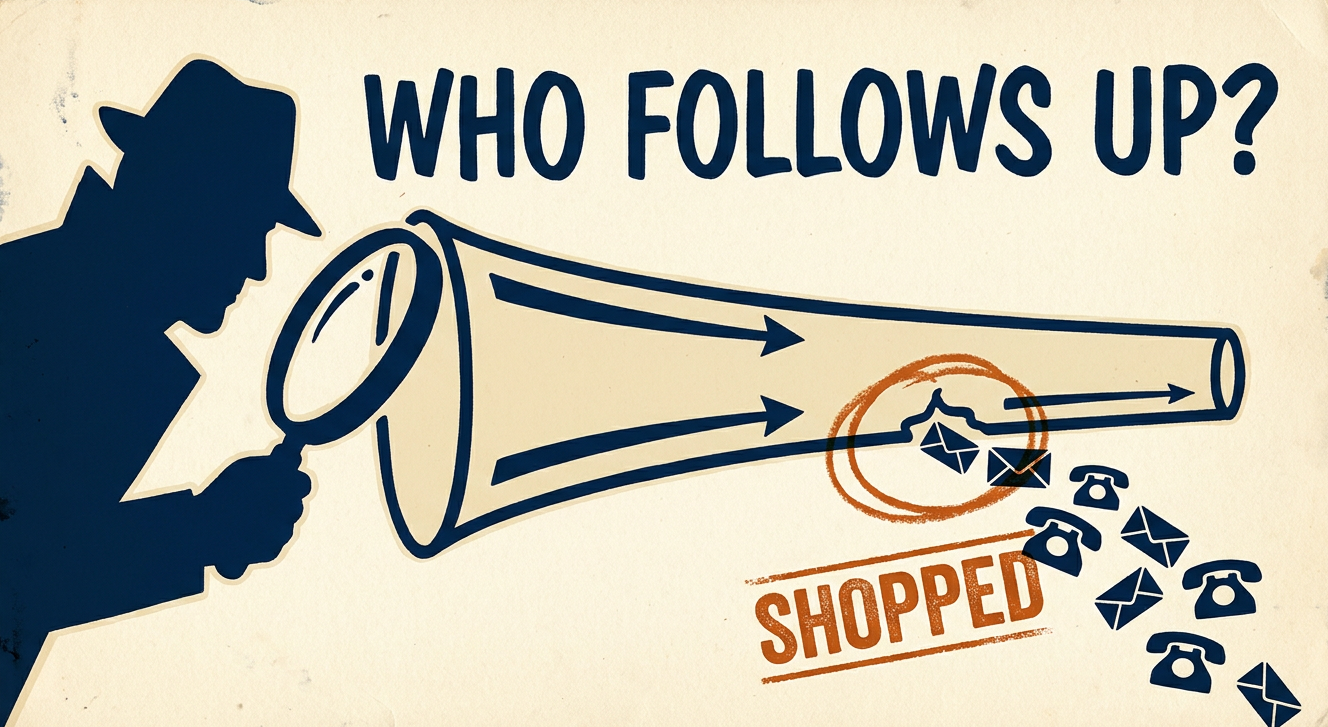
Bezos once settled a dashboard argument by dialing Amazon support from the meeting: the report said sub-one-minute wait times, the call ran past ten, and the measurement changed. Same trick works on your funnel. Open your site on a phone, hit the sales form, and interrogate every required field -- friction invisible from inside is friction buyers feel. Then go undercover: submit a qualified-looking inquiry from an email that doesn't out you, start the clock at submit, and track when the first rep email lands, whether it uses your submitted details, and whether the booking link actually has open slots. Go quiet and see who follows up -- that's where qualified leads die. ElevenLabs' CEO says visitors share more with an AI voice agent than a traditional form. Fix the leaks, then escalate to whoever owns the site.
Source: The Follow Up
152: How to Convert More Meetings From Email
Most teams spend everything on getting the reply and nothing on what follows: a positive reply sits for hours, gets one bump, and the prospect cools. Jed Mahrle routes every reply into Clay, which sorts it into four buckets -- positive, hard no (archived and suppressed), negative-with-context (nurtured on the timeline they state, 90 days if none), and referral/OOO, where Clay finds the departed contact's replacement and pushes them into a referral campaign. A positive reply triggers enrichment for a direct phone number plus a Slack alert carrying the reply, lead details, and thread link; the rep calls first, then emails, while the message is still top-of-inbox. HeyReach adds a cross-channel LinkedIn touch. Non-bookers enter a Smartlead subsequence of three to four emails plus three to four calls; salesmessage.com texts book one or two meetings a week. Reply handling is the system, not the epilogue.
Source: Practical Prospecting
Inside Uber for Business's Global Revenue Enablement Strategy
Corine Hernandez Varga joined Uber for Business's enablement team of five in 2021; it now supports a GTM org of 700-plus people across 60 countries. Her split: central owns onboarding frameworks, global playbooks, and core certifications, while regional leads sit with sellers and move on local priorities without waiting for sign-off -- held together by a weekly all-hands and a separate regional leads meeting, because the org chart is the easy part. BDRs prospect for incoming AEs before their start date, so hires walk in with warm leads in week one; a monthly 'new hire flash' tracks calls, curriculum, and first opportunities at 30, 60, and 90 days. Continuous learning means eight skills per quarter and biannual recertification, not ad hoc product updates. Her AI rule: measure adoption, then efficiency, then results -- teams jumping straight to ROI are measuring something half the team never opened.
Source: Grow & Tell
The Signal: Close Signals and Borrowed Trust
Champion identification shows up in most won deals and almost nobody trains for it. Warm intros still triple reply rates, and 3 million AI citations prove "AI visibility" is two different internets wearing one dashboard.
Your best close signal is probably undertrained
Champion identification shows up in half or more of closed-won deals at 38% of orgs, yet only 14% formally train reps to spot it. The Science of Scaling surveyed 300+ sales leaders via Panoplai and found champion presence is the least-trained positive close signal, behind timeline articulation (31%), proactive prospect engagement (29%), budget disclosure (25%), and decision-maker access (26%). The blind spot extends to red flags: 44% train reps to flag repeatedly deflected decision-maker access, while 22% say their biggest champion obstacle is separating true advocates from casual supporters who can't move the deal. The prescription is sequencing: verify the champion before escalating access, since fighting for meetings through an unvetted advocate means knocking on a door no one inside plans to open. Managers should coach champion judgment in deal reviews rather than checklists; leadership should redirect enablement spend if more than half their wins run through champions nobody is trained to find.
Source: The Science of Scaling
Inside LinkedIn: How to Grow Your Profile, Buyer Behavior and Social Selling
LinkedIn's Trust Advantage research finds 86% of buyers want expertise but only 45% find sellers trustworthy, a gap Catherine Flynn, VP of Marketing for Sales Navigator, frames as an advantage rather than a crisis. The four behaviors separating top sellers: signal-based selling, early multithreading, engagement within hours not weeks, and genuinely personalized outreach. Warm intros pull roughly 3x higher email response and 2x higher connection acceptance, and the most underused entry point is executive sponsors and former customers who moved companies. Flynn argues AI made spray-and-pray effortless, so the edge is doing less, more relevant outreach, and treating your profile as a point of view rather than a resume, with profile views switched on as a buying signal. The part builders should internalize: LinkedIn is the most-cited domain for professional queries per Profound, so what you publish now shapes how you and your company surface in AI answers.
Source: GTMnow by GTMfund
The Two Internets Behind AI Answers, and What They Mean for B2B Marketing
Foundation and AirOps logged 380,000 AI answers across six surfaces (ChatGPT, Claude, Gemini, Perplexity, Google AI Overview, AI Mode) and classified about 3 million citation events across 81 B2B categories. Headline finding: AI answers run on two different internets, and one blended visibility score can't tell them apart. Social domains take about 7% of citations on Google's AI surfaces but 0.3% or lower on ChatGPT, Gemini, and Claude, a roughly 27x gap. ChatGPT's community citation share (9.26%) rivals Google's, driven almost entirely by Reddit, while Gemini sends 71.63% of citations to vendor-owned domains, with no third-party domain appearing in even 14% of its answers. Owned pages still anchor everything: 68.4% brand-and-product citation share in B2B, hence "editorial gets the budget; product pages get the citations." Track citation share per surface, treat G2 as owned media, and audit comparison pages before commissioning another blog post.
Source: Foundation x AirOps
The Economics: Attention Gets Repriced
PPC costs are up over 25% since 2023, AI advertising will pull $32 billion in the US this year on its way to $68 billion by 2030, and ChatGPT's share of AI prompts has already fallen from 70% to 50%. Plan 2027 like the attention layer is changing hands.
Make Paid Media Earn Its Place in Your 2027 Budget
CPC volatility is now a budget line item. Andrei Romanescu, CMO at LumaDock, gets biweekly notifications that a campaign's costs rose 600-plus percent; industry-wide PPC costs are up over 25% since 2023 as AI-driven discovery ends more searches without a click. His fix: shift top-of-funnel search spend into technical content, which grew organic traffic more than eightfold in three months and now draws thousands of ChatGPT sessions averaging over six minutes on page. Agency operator Alexandros Papantoniou cut keywords that drove traffic but not buyers and added a 10% desktop bid adjustment — same PPC budget, roughly 24% lower CPC, 50% more leads. Paul Whittingham reports LinkedIn thought leader ads clicked at £1.34 versus £4.22 for standard brand ads, and Karen Hopper warns AI-engine ad inventory is too immature to abandon Google for. Operator takeaway: give paid media a narrower job — closing buying-intent searches — and let owned content own the top of funnel.
Source: Content Marketing Institute
EMARKETER's Nate Elliott: AI Advertising Will Hit $32 Billion This Year
US AI advertising will generate more than $32 billion this year and double to $68 billion by 2030, per EMARKETER's Nate Elliott — but the money isn't where the hype is. Only $5.4 billion of 2026 revenue flows into ads inside chatbot conversations; the rest is ordinary paid search listings sitting next to AI overviews, and Elliott says that mix holds even in 2030. A survey of several hundred marketers found the real AI adoption is internal: audience research, strategy, creative, media buying, and campaign measurement — long marketers' number one pain point — while only a handful experiment with AI ad formats and many merely play with GEO. His advice: test everything, since chatbots didn't exist four years ago and AI ads didn't exist two. Operator takeaway: AI's first real contribution to paid media is automating unglamorous measurement work, not a new channel to buy — budget accordingly, and keep the search listings close.
Source: Beet.TV
ChatGPT still leads AI assistants, but its share of prompt volume fell from 70% in January to 50% in June while Gemini climbed 17% to 30% and Claude 2% to 11%, per Comscore's Q2 2026 AI Intelligence Report. The category is still expanding: ChatGPT hit 168 million desktop conversations in June and nearly doubled multiplatform visitation year over year to 99 million, Gemini's desktop conversations went from 8 million to 89 million, and Claude peaked near 40 million in April before settling at 22.3 million. Reach is broadening too — 35% of desktop and 29% of mobile users now visit an assistant, up from 25% and 12% in January 2025, with women over-indexing on mobile. AI overviews now appear on 39.4% of Google desktop searches, and sponsored placements crept into AI travel results — 6% of hotel prompts in March to 24% by May. Operator takeaway: an AI visibility plan optimized for one assistant is already a single point of failure.
Source: Comscore
Community Spotlight
Slowly Shifting from SMB to Enterprise Deals; Suggestions on Pricing?
An appointment-setting agency that has charged per appointment plus a small retainer for two years is starting to close mid-market and enterprise clients, but books only 1-2 meetings a month (excluding no-shows) with bigger companies and is unsure whether to quote dynamic per-appointment fees by company size or a fixed price. The comment-section verdict: headcount is a lazy proxy, so price on the value and complexity of the meeting, keep tiers to two or three at most, and stop selling a per-meeting meter to enterprise buyers who want a retainer against a named-account list. The sharpest thread in the debate is incentive alignment: several operators argue the cherry-picking problem is a comp problem, not a pricing problem, and should be fixed by paying setters a flat rate per qualified meeting held plus a bonus for real pipeline.
Source: r/Entrepreneur — OpManBros
Key Takeaways:
- Price the meeting by what it is worth to the buyer, not headcount: a buyer-side CEO in the thread points out that a meeting with a 300-person company buying $5k is worth less than one with a 50-person company buying $200k, so anchor enterprise fees on deal size and complexity rather than employee count.
- Don't A/B four different quotes on four live enterprise prospects — they talk to each other and you look like you are making it up; pick one model for the batch, then test on the next, and if you add size bands later use at most two or three (e.g. under 50 / 50-300 / 300 plus).
- Stop selling the per-appointment meter to enterprise: the consensus is a monthly retainer against a named-account list, because a per-meeting invoice quietly makes a big client suspect you are padding the count, while per-appointment pricing still fits SMB where the buying process is simple.
- Fix the incentive problem on the comp side, not the pricing side: pay setters a flat amount per qualified meeting held that is the same for SMB and enterprise, with a small bonus for meetings that turn into real pipeline — paying more per enterprise meeting makes them cherry-pick logos and drops close rate.
- The SMB playbook does not transfer: enterprise buys through procurement, legal, and a committee, expects annual contracts, security reviews and an SLA, prices at 5-10x SMB for similar-looking work, and needs its own prep process — meanwhile the OP is booking just 1-2 enterprise meetings a month excluding no-shows.
Get the signal. Skip the noise.
AI sales tool verdicts, GTM playbooks, and market intelligence -- curated weekly for founders and revenue teams.